
A Question Of Cognition
The mind you have todayis the mind worth keeping.
Memory softens. Names take longer to surface. The right word hesitates on the tongue. Most of us accept this as the natural cost of getting older — but the science tells a more hopeful story. Much of what we call "ageing of the mind" is, at its root, a quiet ageing of the blood vessels that feed it.
This page explores the connection between brain health, cognitive function and the ageing of the arteries that supply the brain — and why the Nobel-recognised signalling molecule nitric oxide sits at the centre of that story.
Part One — The Quiet Drift
Age-related cognitive decline: the slow erosion of clarity.

The small moments — keys in hand, the name on the tip of the tongue — that accumulate quietly across the decades.
It rarely arrives as a single dramatic moment. It is more a gathering of small ones. You walk into a room and forget why. You read a paragraph twice. A familiar face appears, attached to a name that simply will not come. The mental sprint of your thirties has become a careful walk, and you have, without quite noticing, begun to plan around it.
The medical literature has a phrase for this — age-related cognitive decline — and it is now considered a normal feature of healthy ageing. Beginning subtly in the fourth decade and accelerating from the sixth, it touches processing speed, working memory, word-finding, attention and the ease with which we shift between tasks. It is not dementia. It is the unhurried background hum of a brain receiving slightly less than it was built for.
And the reason, for the great majority of people, is not the brain itself. It is the supply line.

What it costs
More than memory. The full shape of a life.
Cognition is not a single faculty. It is the orchestra behind everything that makes a day feel like yours — the wit that lands a joke at the dinner table, the patience that listens to a grandchild's long story, the focus that finishes the book, the confidence that drives a familiar road in the rain.
When clarity slips, the consequences are rarely just cognitive. Mood follows. Frustration rises. People withdraw from conversations they used to lead, decline invitations that once delighted them, and slowly narrow the world to what feels manageable. The emotional cost — quiet self-doubt, a creeping sense of being left behind — often runs deeper than the forgetfulness itself.
Preserving cognition is not vanity. It is the preservation of relationships, independence, work that still matters and an interior life that remains rich. It is, in the most literal sense, the preservation of self.
Part Two — The Hungry Organ
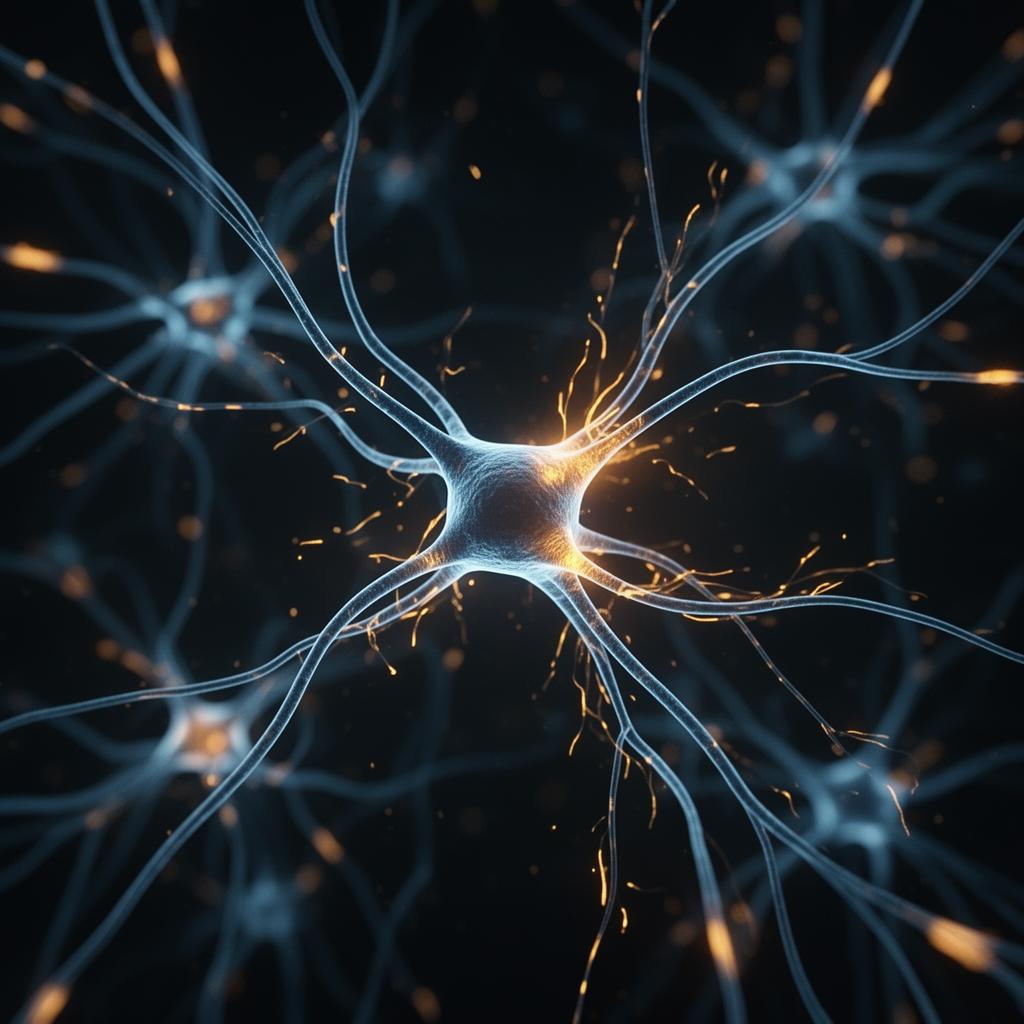
Cerebral blood flow: the foundation of brain health.
The human brain accounts for roughly two per cent of body weight, yet consumes about twenty per cent of the body's oxygen and a quarter of its glucose. It has almost no capacity to store fuel. Every thought, every memory retrieval, every flash of recognition is paid for in oxygen and nutrients delivered, second by second, by the cerebral circulation.
That circulation runs through roughly four hundred miles of blood vessels inside the skull alone — many of them capillaries so fine that red blood cells pass through in single file. The walls of those vessels are lined with a tissue called the endothelium, and the endothelium is not a passive pipe. It is a living, signalling organ. It decides, moment by moment, how wide each vessel will open.
When the endothelium works well, blood flow rises to meet demand — the working region of the brain gets exactly what it needs, exactly when it needs it. When the endothelium falters, neurons receive marginally less oxygen than they are asking for. The result is precisely what most of us experience after fifty: a brain that still works, but works through a slightly narrower aperture.
Part Three — The Molecule Behind It
Nitric oxide: the signal that opens the brain to itself.
In 1998 the Nobel Prize in Physiology or Medicine was awarded jointly to Robert Furchgott, Louis Ignarro and Ferid Murad for the discovery that a simple gas — nitric oxide, or NO — acts as a signalling molecule in the cardiovascular system. The committee described it as a finding that fundamentally changed our understanding of how the body regulates itself.
Nitric oxide is produced on demand by the endothelium of every blood vessel in the body, including the dense, delicate network that feeds the brain. Its job is to tell those vessels to relax and widen — a process called vasodilation. Wider, more responsive vessels mean better cerebral perfusion: more oxygen, more glucose, more nutrient delivery to the regions that are working at any given moment.
Without adequate nitric oxide, the brain's supply line stiffens. With it, the brain receives what it was designed to receive. The molecule is small. The consequence — for memory, for focus, for the felt clarity of being alive — is anything but.

1998 Nobel Prize
Awarded to Furchgott, Ignarro and Murad for the discovery of nitric oxide as a signalling molecule in the cardiovascular system.

"Nitric oxide is so central to cardiovascular function that, were it a drug, it would be the most important pharmaceutical ever made."
— Dr. Louis J. Ignarro, Nobel Laureate (1998)
Part Four — The Mechanism
How nitric oxide protects memory, focus and brain health.
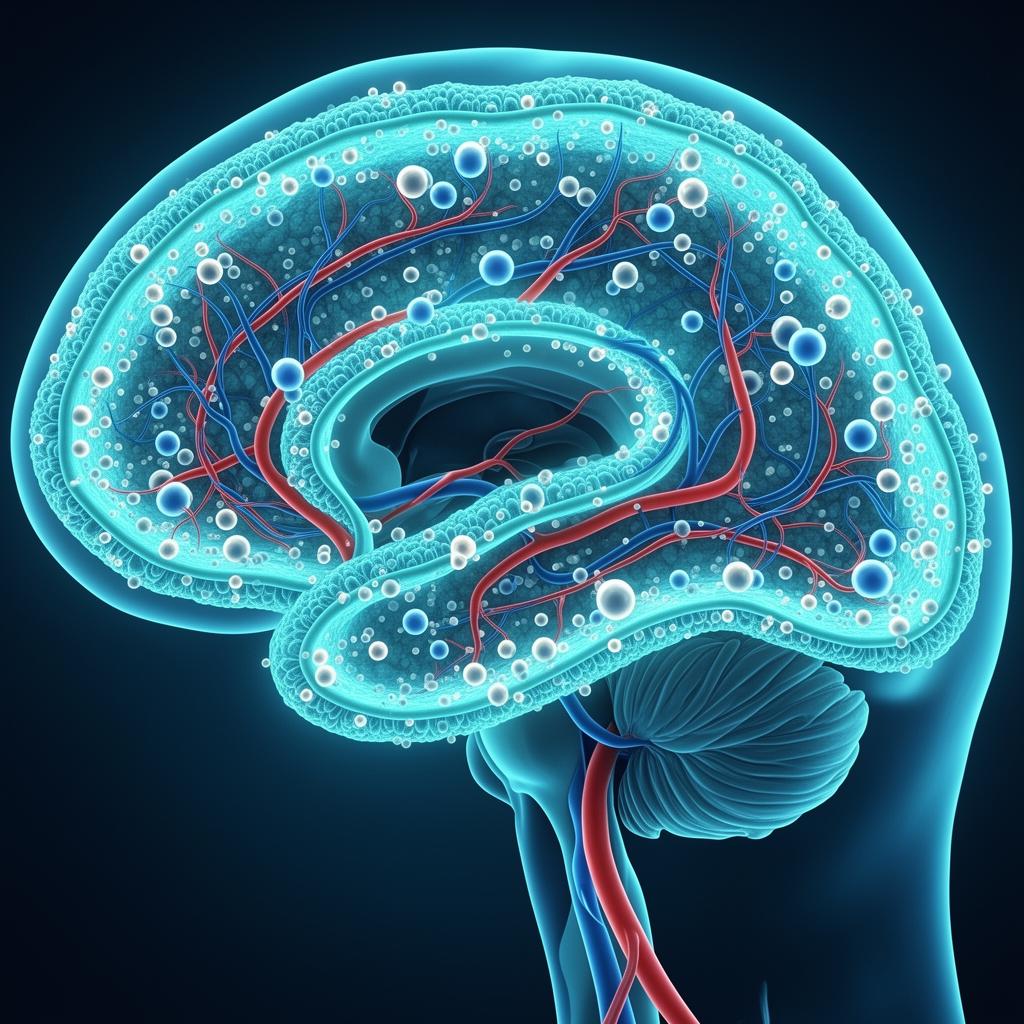
Nitric oxide protects cognition through several quietly connected actions. First and most directly, it improves cerebral blood flow. Better-perfused neurons fire more reliably, encode memories more cleanly and recall them with less effort.
Second, it supports neurovascular coupling— the elegant local response in which a region of brain that begins working harder immediately receives more blood. Researchers consider this coupling one of the earliest things to weaken in age-related cognitive decline, and it is fundamentally a nitric oxide–dependent process.
Third, healthy nitric oxide signalling reduces vascular inflammation and slows the formation of stiff, plaque-prone arteries — the same vascular deterioration now recognised as a major contributor to vascular cognitive impairment and to many cases of dementia. Cardiologists have long said that what is good for the heart is good for the brain. The molecular reason they are right has a name: NO.
Finally, nitric oxide plays a direct role inside the brain itself, where it contributes to synaptic plasticity — the capacity of neurons to form and strengthen connections, which is the cellular basis of learning and memory.
of the body's oxygen is consumed by the brain — though it is only 2% of body weight.
approximate decline in endothelial nitric oxide production between ages 40 and 70.
miles of blood vessels inside the human brain, every one lined by NO-producing endothelium.
Part Five — Why It Fades
What changes inside the vessels as the decades pass.
The Ageing Endothelium
Less signal, less flow
- Endothelial cells produce progressively less nitric oxide from the fourth decade onward.
- Vessels lose elasticity; arterial walls thicken and stiffen.
- Oxidative stress quietly scavenges NO before it can act.
- Neurovascular coupling weakens — the brain's "demand response" lags.
- Capillary networks rarefy; some regions receive marginally less perfusion year on year.
A Brain Well Supplied
What healthy NO signalling looks like
- Responsive vessels open precisely where and when the brain is working.
- Steady oxygen and glucose delivery to demanding regions.
- Lower vascular inflammation; healthier endothelial lining over time.
- Better synaptic plasticity — the cellular basis of learning.
- Cleaner clearance of metabolic waste, including during sleep.
The Evidence Base
What the peer-reviewed science actually says.
The link between nitric oxide and the thinking brain is not a wellness claim. It has been mapped, measured and published in mainstream physiology, neurology and cardiology journals over more than two decades. A representative sample:
Katusic & Austin, European Heart Journal (2014)
Endothelial nitric oxide: protector of a healthy mind.
A landmark Mayo Clinic review in one of cardiology's leading journals argued that endothelial NO is essential for maintaining cerebral perfusion and cognitive function, and that its decline is a central mechanism in vascular cognitive impairment and Alzheimer's-type pathology.
Eur Heart J. 2014;35(14):888–894. doi:10.1093/eurheartj/eht544
Toda, Ayajiki & Okamura, Pharmacological Reviews (2009)
Cerebral blood flow regulation by nitric oxide.
Comprehensive review establishing that NO produced by endothelial and neuronal NO synthase is the principal moment-to-moment regulator of cerebral blood flow, and that impaired NO signalling is implicated in stroke, dementia and age-related cognitive decline.
Pharmacol Rev. 2009;61(1):62–97. doi:10.1124/pr.108.000547
Presley et al., Nitric Oxide (2011)
Acute effect of a high nitrate diet on brain perfusion in older adults.
In older adults, a single high-nitrate (NO-precursor) diet significantly increased regional cerebral blood flow in the frontal lobe white matter on MRI — the same brain regions implicated in executive function and processing speed.
Nitric Oxide. 2011;24(1):34–42. doi:10.1016/j.niox.2010.10.002
Wightman et al., Physiology & Behavior (2015)
Dietary nitrate modulates cerebral blood flow parameters and cognitive performance in humans.
A double-blind, placebo-controlled crossover trial showing that boosting the dietary nitrate–nitrite–NO pathway altered prefrontal cortex blood flow and improved performance on a demanding cognitive task in healthy adults.
Physiol Behav. 2015;149:149–158. doi:10.1016/j.physbeh.2015.05.035
Garthwaite, European Journal of Neuroscience (2008)
Concepts of neural nitric oxide-mediated transmission.
Foundational neuroscience review describing NO's role inside the brain itself — as a diffusible signalling molecule essential for long-term potentiation, the cellular mechanism underlying learning and memory.
Eur J Neurosci. 2008;27(11):2783–2802. doi:10.1111/j.1460-9568.2008.06285.x
Kapil et al., Hypertension (2015)
Dietary nitrate provides sustained blood pressure lowering in hypertensive patients.
Randomised, double-blind, placebo-controlled trial demonstrating that restoring the NO pathway via dietary nitrate produces measurable, sustained improvements in endothelial function and vascular health — the same vascular bed that supplies the brain.
Hypertension. 2015;65(2):320–327. doi:10.1161/HYPERTENSIONAHA.114.04675
Iadecola, Neuron (2017)
The neurovascular unit coming of age: a journey through neurovascular coupling in health and disease.
An authoritative Cornell review establishing that breakdown of NO-dependent neurovascular coupling — the brain's ability to match blood flow to local neural demand — is one of the earliest measurable changes in cognitive ageing and a contributor to Alzheimer's disease.
Neuron. 2017;96(1):17–42. doi:10.1016/j.neuron.2017.07.030
These are representative studies, not an exhaustive list. A PubMed search for "nitric oxide" and "cognition" returns more than two thousand peer-reviewed papers; for "endothelial dysfunction" and "dementia," over a thousand more.
Part Six — Replenishing The Pathway
Why supporting nitric oxide can slow the drift.
The body manufactures nitric oxide from a dietary amino acid called L-arginine, with help from a closely related amino acid, L-citrulline, and a panel of co-factors including certain B vitamins, folate, vitamin C and antioxidant nutrients that prevent NO from being destroyed before it can do its work. In youth, an ordinary diet provides enough of these inputs and the endothelium responds eagerly. With age, the same diet often is not enough.
This is the rationale for targeted nitric oxide supplementation. By restoring the raw materials and the co-factors the endothelium needs, it becomes possible to support — not force — the body's own production of NO. The evidence base now spans decades of cardiovascular research and a growing body of work on cerebrovascular health, cognitive performance and healthy ageing.
Supplementation does not reverse time. What it can do is slow the quiet narrowing of the supply line — keeping the endothelium responsive, the vessels supple, and the brain well-fed for longer. For many people that translates to clearer mornings, fewer foggy afternoons, sharper recall and the sustained mental presence that a full life still asks of them.

A mind that stays present for the conversations, the decisions and the mornings that still matter.
Part Seven — A Considered Solution
Introducing ėNOS.
The enzyme that produces nitric oxide on the endothelial lining of every blood vessel — including the cerebral vessels that feed the thinking brain — is called endothelial nitric oxide synthase. ėNOS, the supplement, takes its name from that same enzyme, and is formulated for a single, specific purpose: to give the body the raw materials and co-factors it needs to produce nitric oxide on demand, the way it did more easily in earlier decades.
ėNOS is a delicious powdered nutritional drink. It provides L-arginine and L-citrulline — the primary amino acid precursors used by the endothelium to manufacture nitric oxide — together with carefully selected vitamins, minerals and antioxidant nutrients chosen to support endothelial health, protect nitric oxide from oxidative breakdown, and sustain the body's natural NO pathway across the day.
The purpose of ėNOS is not stimulation. It is restoration of a pathway the body has always known how to use. For the cardiovascular system that means better circulation. For the brain that means a steadier, better-supplied home for memory, focus and the simple pleasure of feeling mentally here.
ėNOS is not intended to replace healthy lifestyle habits. Sleep, movement, considered nutrition and meaningful social engagement remain the foundations of cognitive vitality at any age. ėNOS is designed to support the physiology underneath all of them.
You received this from someone who thought it might matter to you.
For more information refer to the person who shared this link.
Thank you for reading. Nitric oxide is one of the most important discoveries in modern physiology, and its relevance to overall health, wellness, natural energy and vitality, is only growing as the research deepens.